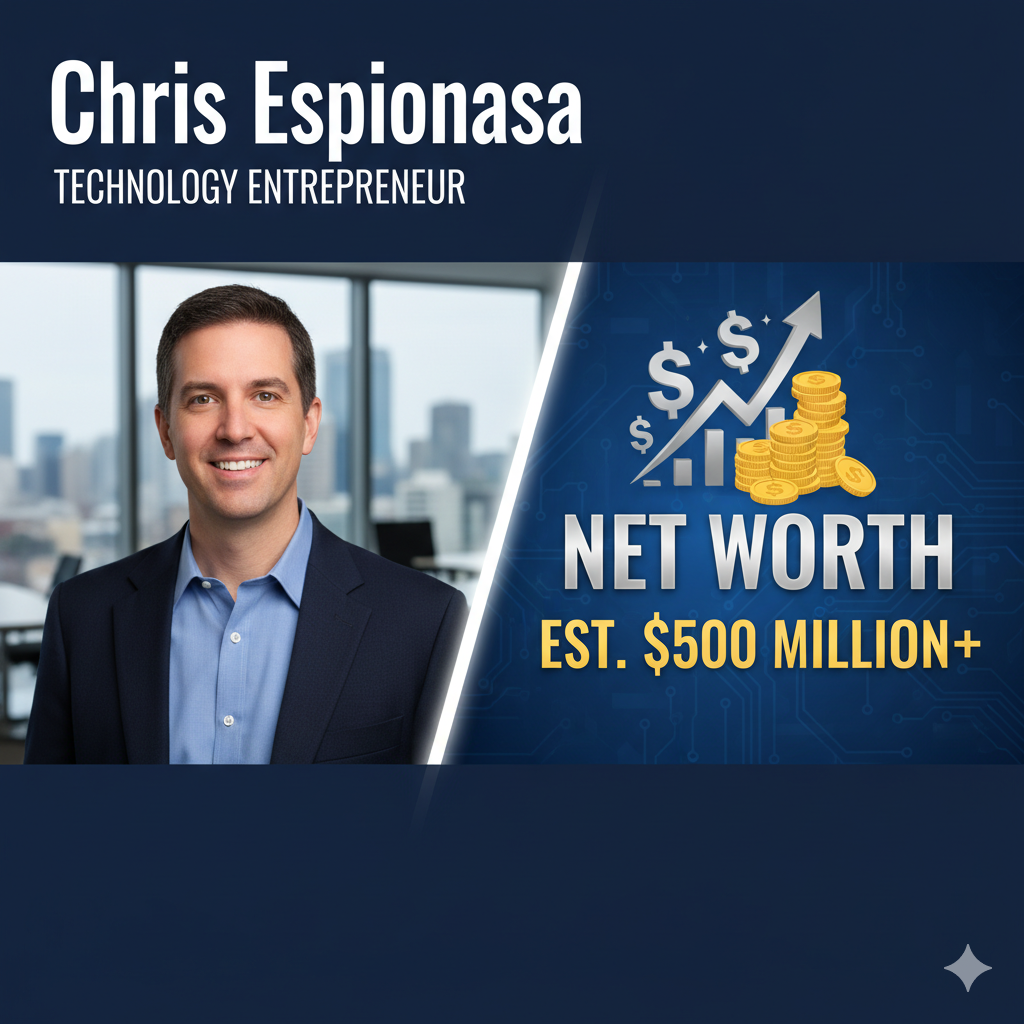
Chris Espinosa Net Worth 2025: How Apple’s Longest-Serving Employee Built His $50 Million Legacy
Chris Espinosa might not be the face you see in Apple’s glossy ads or keynote spotlights, but he’s the quiet force who’s been there since the very beginning—literally helping build the company from a garage setup. At 63 years old in 2025, this Silicon Valley veteran holds the title of Apple’s longest-serving employee, a role that’s earned him not just respect but a solid $50 million net worth. This isn’t the story of a flashy CEO or a viral inventor; it’s the tale of a curious kid from Sunnyvale who turned summer coding gigs into a lifelong passion, contributing to everything from the Apple II to modern iOS features. With no drama, no scandals—just steady dedication—Chris’s journey shows that true wealth in tech often comes from showing up every day and staying true to the craft. In this friendly overview, I’ll walk you through his humble start, the projects that shaped Apple (and his bank account), and why his low-key approach to fortune-building is so inspiring. If you’re a tech history buff or just admire folks who stick it out, let’s geek out together.
Early Life: A Sunnyvale Kid’s First Brush with Computers
Chris Espinosa was born on October 2, 1961, in Sunnyvale, California—the heart of what would become Silicon Valley—into a family that valued curiosity over flash. His dad, a mechanical engineer, and his mom, a homemaker, weren’t tech moguls; they were everyday folks in a town buzzing with early computer innovation. Young Chris was the type of kid who took things apart to see how they ticked—radios, toys, you name it. By age 12, he was tinkering with electronics, but it was high school at Homestead High that changed everything.
Homestead wasn’t just any school; it was where Steve Jobs and Steve Wozniak had studied years earlier, dreaming up the Apple I. Chris, a bright but unassuming teen, got hooked on computers through the school’s early tech club. In 1975, at just 14, he wandered into Paul Terrell’s Byte Shop—the same store where Jobs and Wozniak sold their first 50 Apple I boards. Impressed by the young enthusiast’s smarts, Jobs invited Chris to help with manuals and bug-testing in the Jobs family garage. “It was like being handed a magic box,” Chris later reflected in interviews. No pay at first—just the thrill of creation. Those after-school hours in 1976, coding BASIC programs and debugging amid pizza boxes and soldering irons, weren’t chores; they were Chris’s first love letter to tech. Sunnyvale’s sunny skies and startup hum gave him the perfect playground—no Ivy League pressure, just pure, unfiltered tinkering that set the stage for a career most could only dream of.
Also Check:- Stephen Baldwin Net Worth 2025: How the Baldwin Brother Built His $1 Million Legacy
Joining Apple: From Garage Helper to Employee No. 8
By 1977, Apple’s incorporation made Chris’s gig official: At 15, he became employee number 8, the youngest on the payroll. His role? Writing software manuals for the Apple II—the machine that put personal computers in homes worldwide. Picture a teenager, backpack slung over one shoulder, pedaling his bike to a cramped Los Altos office, hammering out user guides while Wozniak fine-tuned circuits nearby. Chris’s eye for detail shone; his manuals were clear, witty even, helping demystify tech for everyday folks.
As Apple grew, so did Chris’s responsibilities. He contributed to the Apple III’s development in 1980, fixing firmware glitches that could have sunk the project. But here’s a twist that still stings for fans: Before the 1980 IPO, Jobs offered Chris 2,000 shares at $5 each—a stake that, with splits, would be worth over $100 million today. Chris, ever the modest teen, declined, opting for steady paychecks instead. “I didn’t see the future like they did,” he admitted humbly. That choice didn’t derail him; by the early ’80s, he was full-time, earning a solid middle-class salary amid Apple’s boom. Those garage days weren’t just a job—they were family, with Chris sleeping under desks during crunch times and sharing laughs over prototypes. It’s a reminder that at Apple’s core, success was about passion, not pedigrees.
Career Milestones: Shaping Apple’s Software Soul for Decades
Chris’s path at Apple is a highlight reel of quiet revolutions. In the ’80s, he helped launch MacWrite and MacPaint for the Macintosh, crafting the intuitive software that made the Mac a designer’s dream. The ’90s brought leadership: As manager of Apple’s publications group, he oversaw developer docs for System 7 and PowerPC transitions, ensuring smooth sails during hardware shifts.
The 2000s tested his mettle—Apple’s near-collapse under Gil Amelio saw Chris briefly study at UC Berkeley (advised by future Apple alum Andy Hertzfeld), but Jobs lured him back in 1997 to rebuild the software side. He led teams on WebObjects (Apple’s first web framework) and HyperCard, tools that powered early internet apps. Fast-forward to the iEra: Chris contributed to AppleScript (1993), Xcode (ongoing), and iOS Family Sharing (2013), the feature that lets families share purchases seamlessly. In 2025, at Apple’s Cupertino HQ, he’s a Distinguished Engineer, tackling special projects like AI ethics in software—low-profile but high-impact.
His tenure? Nearly 50 years by now, outlasting CEOs and crashes. Chris’s secret? Adaptability—he’s coded in assembly, managed teams, and mentored newbies, always prioritizing user clarity. No corner office drama; just a guy in jeans, shaping the tech we touch daily. It’s the kind of loyalty that built Apple—and quietly built his wealth.
| Year | Milestone | Role/Contribution | Impact |
|---|---|---|---|
| 1976 | Joins as teen helper | Writing Apple II manuals, bug-testing | Helped launch first hit product |
| 1980 | Works on Apple III | Firmware fixes and docs | Stabilized early hardware push |
| 1984 | Contributes to Macintosh launch | MacWrite/MacPaint software | Made Mac user-friendly |
| 1993 | Leads AppleScript development | Automation language for Mac | Revolutionized scripting |
| 1997 | Returns post-Berkeley | Software rebuild under Jobs | Key to iMac/iPod era |
| 2013 | Family Sharing feature | iOS family purchase sharing | Boosted ecosystem loyalty |
| 2025 | Distinguished Engineer | AI/software ethics projects | Guiding future innovations |
These steps highlight how Chris’s steady hand steered Apple’s software ship.
Building Wealth: Stock, Salary, and Smart Choices
Chris’s $50 million net worth in 2025 stems from Apple’s growth, not get-rich schemes. No IPO shares? No problem—he’s amassed stock through options, bonuses, and RSUs over decades. Apple’s 2025 share price hovers at $230, and with his senior status, estimates peg his holdings at 200,000-300,000 shares (post-splits), worth $46-69 million alone. Salary? As a Distinguished Engineer, he pulls $400,000-$600,000 base, plus $1-2 million in annual bonuses tied to performance.
Dividends add gravy: At 0.96% yield, his shares generate $400,000+ yearly. Investments? Low-key—real estate in the Bay Area (a $3-5 million home in Los Altos Hills) and diversified funds, avoiding flashy risks. No side hustles or startups; Chris’s wealth is Apple-centric, grown through loyalty. That declined 1980 offer? A missed $100 million, but his path proves contentment trumps what-ifs. In a startup world of overnight unicorns, Chris’s slow-burn fortune is refreshingly real.
Also Check:- Alec Baldwin Net Worth 2025: How the Hollywood Heavyweight Built His $70 Million Empire
Personal Life: Family, Privacy, and a Life Beyond the Lab
At 63, Chris keeps it private—no tabloid tales or social media scrolls. Married to his college sweetheart, he and wife Gretchen share two kids, focusing on soccer games and Silicon Valley hikes over Hollywood parties. A Bay Area lifer, he unwinds with cycling, reading sci-fi, and mentoring at local STEM programs. Faith? Quietly spiritual, drawing from his Catholic upbringing. No flashy yachts; his life echoes Apple’s ethos—innovate simply.
Challenges? The 1990s layoffs hit close, but Chris stayed, emerging stronger. Health-wise, he’s fit, crediting garage-era discipline. Family dinners? Sacred, often with tales of “the old days” that blend nostalgia and lessons for his kids.
Legacy and Reflections: The Unsung Hero of Apple’s Garage
Chris Espinosa’s $50 million net worth in 2025 isn’t headline-grabbing, but it’s profound—a reward for being the constant in Apple’s chaos. From teen coder to engineering sage, he’s the thread weaving the Mac to the iPhone. As Apple hits $3.5 trillion market cap, Chris reminds us: Longevity beats lottery tickets. His story? A blueprint for quiet excellence in a loud world.
Final Thoughts
Chris Espinosa’s $50 million net worth in 2025 is a quiet triumph—forged in garage code and decades of dedication. From Apple’s No. 8 to its enduring soul, he’s shown that true legacy isn’t loud; it’s lasting. As he shapes tomorrow’s tech, Chris inspires: Build with heart, stay humble, and the rewards follow. What’s your favorite Apple throwback? Share below—let’s celebrate the unsung builders.